THOR Voice AI Real-Time Live-Call Assistants: SaySo
SaySo unveils THOR Voice AI real-time live-call assistants, transforming live calls with real-time transcription, formatting, and action.
SaySo is expanding the capabilities of voice-to-text technology beyond simple transcription by bringing THOR Voice AI real-time live-call assistants into everyday calls. The announcement positions SaySo as a desktop voice-to-text platform that can operate inside live conversations, enabling real-time transcription, on-the-fly drafting, and immediate formatting during calls. For professionals who rely on fast, accurate writing—whether drafting emails, updating project notes, or responding to clients—this development could change how they work during the moment of spoken interaction. SaySo emphasizes that its solution runs locally, aligning with privacy-conscious workflows by ensuring zero data retention. This combination of live AI assistance and strong privacy promises a compelling value proposition for knowledge workers, executives, and teams that depend on rapid, accurate writing in the flow of business conversations. (sayso.ai)
In the broader industry, the idea of embedding AI assistants into live calls is gaining ground. Industry coverage highlights how real-time AI agents can be integrated into calls at the network level, offering context-aware prompts and on-demand guidance as conversations unfold. While SaySo is marketing a desktop solution with on-device processing, the market-wide interest in real-time voice AI during calls is part of a larger trend toward more capable, context-aware voice automation. The Tallence overview of THOR Voice describes how live-call AI can operate natively within telecom environments, underscoring the momentum behind live-call AI concepts that SaySo’s approach is aligned with in spirit if not in implementation. This broader context helps readers understand why a feature like SaySo’s real-time live-call assistants matters now. (tallence.com)
This report from SaySo’s own materials also emphasizes the product’s core differentiators: intelligent transcription that trims filler words, smart formatting that structure spoken lists and key points, auto-editing that detects self-corrections, and a personal dictionary for custom terminology. The platform supports more than 100 languages with real-time translation, and crucially, all processing happens locally, with zero data retention. For professionals who write a lot of emails, documents, or messages, the ability to see clean, formatted text emerge during a live call could shave minutes off each interaction and improve clarity for recipients. SaySo’s documentation and product pages provide the basis for these claims and describe how the technology integrates with any app—email clients, spreadsheets, documents, and browsers—without requiring changes to existing workflows. (sayso.ai)
Opening
The announcement signals a shift in how voice-to-text tools intersect with live communication. By introducing THOR Voice AI real-time live-call assistants into SaySo’s desktop platform, SaySo aims to offer immediate, actionable writing assistance as conversations unfold. In practical terms, users speak, and SaySo transcribes with intelligent elimination of filler words, then formats lists and key points as they emerge. If a speaker corrects themselves mid-sentence, SaySo’s auto-editing recognizes the self-correction and updates the transcript accordingly, reducing the need for later cleanup. In addition, the real-time translation feature promises to bridge language barriers during calls, expanding the reach of multi-language teams and clients. The combination of local processing, broad app compatibility, and a personal terminology dictionary positions SaySo as a practical tool for those who want to keep pace with dynamic conversations without sacrificing accuracy or privacy. (sayso.ai)
From an accessibility and productivity standpoint, the news underscores a trend toward turning spoken language into polished, shareable text in real time. The SaySo platform’s emphasis on live, contextual transcription and smart post-processing means that a sales call, a client check-in, or an internal sync can yield a near-ready draft immediately after the call ends. While many professionals are accustomed to post-call note-taking, the ability to generate formatted drafts during the call could shift how teams capture and distribute critical information. The real-world impact hinges on the balance between transcription fidelity, formatting quality, and the reliability of live translation across 100+ languages. If these elements perform as described, SaySo could become a default companion for busy knowledge workers who demand speed and precision in written communication. (sayso.ai)
Section 1: What Happened
Announcement Details
The core of the announcement centers on SaySo’s expansion into real-time live-call assistance, branded in part by the concept of THOR Voice AI real-time live-call assistants. SaySo describes its desktop voice-to-text platform as capable of transcribing speech into polished, formatted text across any application—email, documents, spreadsheets, and browsers. The feature set highlighted for this new capability includes: intelligent transcription with filler word removal, self-correction detection and auto-editing, smart formatting that structures spoken lists and key points, and a personal dictionary for domain-specific terms. In addition, SaySo notes that it supports 100+ languages with real-time translation, enabling multilingual conversations to produce readable, translated outputs on the fly. And because the processing is local, SaySo emphasizes privacy advantages: zero data retention and no cloud-based residency of sensitive content. These claims are aligned with SaySo’s public materials and product descriptions. (sayso.ai)
Timeline and Availability
The SaySo materials describe the feature and its capabilities, but they do not specify a public launch date or a fixed availability window for the live-call assistant functionality. The company’s product pages emphasize ongoing development for real-time voice-to-text workflows, with updates posted to their site as enhancements are completed. The absence of a specific, widely publicized release date is consistent with many software product rollouts that occur in staged waves—initial beta access for selected users, followed by broader availability. Readers should monitor SaySo’s official announcements and product pages for precise timing and rollout details. (sayso.ai)
Key Capabilities and Use Scenarios
Several concrete capabilities are foregrounded in SaySo’s messaging. First, the real-time transcription is described as fast and accurate, with automatic removal of filler words to deliver cleaner text as the speaker talks. Second, the smart formatting capability is designed to structure spoken lists and key points automatically, reducing manual reformatting after a call. Third, the auto-editing feature detects self-corrections, ensuring the transcript reflects the speaker’s intended meaning without requiring additional editing later. Fourth, the platform’s extensive language support (100+ languages) with real-time translation expands the range of possible conversations across international teams and clients. Finally, the local processing model is highlighted as a privacy-centric approach—processing happens on the user’s device rather than in the cloud, with zero data retention. These features collectively map to real-world workflows such as live note-taking during client discussions, on-call project updates, and in-call drafting of emails or messages using SaySo’s voice-to-text capabilities. (sayso.ai)
Industry Context and Related Concepts
The broader tech ecosystem has been increasingly exploring real-time AI assistance during live calls. Industry articles describe efforts to embed AI agents in conversations, including talk-paths where in-call prompts and live suggestions help agents respond more effectively. While SaySo’s model emphasizes desktop-based, local processing for privacy, the general premise of THOR Voice AI real-time live-call assistants sits within a larger trend of live-call AI augmentation. This context helps readers understand why SaySo’s approach could resonate with knowledge workers who encounter time pressures on call-driven communications and wish to produce clean, shareable text instantly. (tallence.com)
What It Means for SaySo’s Positioning
SaySo’s emphasized differentiation—instant, high-quality transcription; smart formatting; auto-editing; personal dictionaries; and offline processing—speaks to a positioning as a practical, privacy-focused assistant for professional writing. If deployed at scale, this approach could reduce post-call editing time, accelerate the creation of summarized notes and action items, and improve consistency across teams that rely on voice input to generate written outputs. The company’s stated commitment to local processing aligns with increased demand for on-device privacy solutions, a trend that has grown alongside consumer and enterprise concerns about data stewardship. In this sense, the THOR-inspired name in the keyword aligns with an industry-wide emphasis on real-time, context-aware AI for communications rather than solely post-call analysis. (sayso.ai)
Section 2: Why It Matters
Productivity Soars for Knowledge Workers
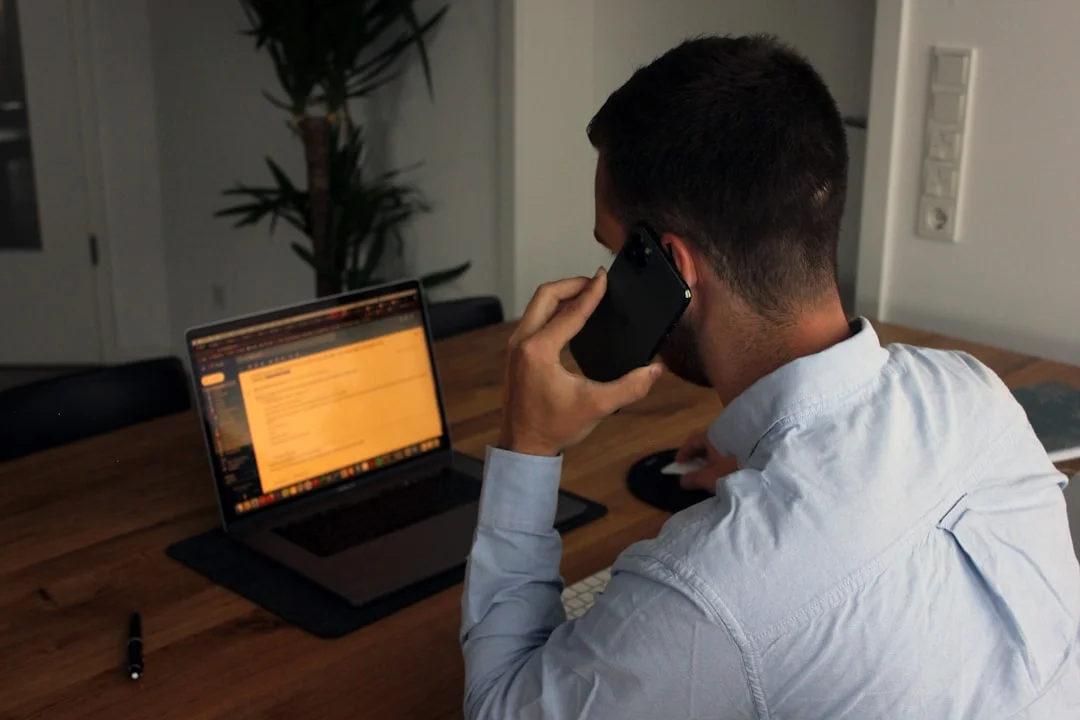
Photo by David Hahn on Unsplash
For professionals who write emails, documents, and briefs daily, the ability to capture spoken content and convert it into structured, publish-ready text in real time reduces the lag between thought and written output. SaySo’s real-time transcription with filler-word trimming helps users move from speech to a clean draft more rapidly, while auto-editing of self-corrections minimizes the time spent polishing errors. The smart formatting capability further accelerates the drafting process by turning spoken lists and key points into clearly structured text without manual reformatting. In practice, this can translate into faster email cycles, quicker document drafts, and more consistent meeting notes. The localized processing maintains privacy, which is a critical factor for teams handling sensitive information. These improvements collectively address a core business need: faster, more efficient writing without compromising quality or security. (sayso.ai)
Enhanced Multilingual Collaboration
The 100+ language support with real-time translation is a notable capability for global teams. In today’s distributed work environment, language barriers often slow decision-making and collaboration. SaySo’s multilingual support aims to enable conversations in one-on-one or small-group contexts with on-the-fly translation that preserves tone and structure in the resulting text. For executives and international teams, this capability can help standardize documentation across languages, reduce misunderstandings, and speed up cross-border workflows. While translation accuracy in live settings depends on multiple factors (language pairs, domain terminology, acoustic conditions), offering real-time translation as part of a voice-to-text pipeline can meaningfully shorten the loop between spoken discussion and written deliverables. (sayso.ai)
Privacy, Data Governance, and Trust
A key differentiator highlighted by SaySo is local processing with zero data retention. In an era where data privacy and governance are central concerns for enterprises, on-device transcription reduces the risk associated with cloud-based data transmission and storage. Organizations that operate under strict data handling policies may find this model attractive, as it aligns with regulatory and compliance requirements that favor minimized data exposure and retention. The privacy-centric approach may also facilitate deployment in regulated environments where data sovereignty and control over information are paramount. As with any AI-assisted workflow, ongoing governance around access, usage, and model updates remains essential, but SaySo’s local processing proposition demonstrates how privacy considerations can be woven into the core value proposition of live-call AI. (sayso.ai)
Broader Market and Competitive Context
The emergence of live-call AI assistants intersects with broader trends in AI-powered productivity tools and voice-first workflows. While SaySo emphasizes a desktop, local-processing model for its real-time transcription and formatting, other players in the voice-to-text and AI-assisted writing space continue to explore cloud-based approaches and hybrid models. In this evolving landscape, SaySo’s emphasis on real-time, formatted output and robust language support positions it as a practical option for users who value immediate, on-device results and privacy. As organizations evaluate implementations, factors to watch include transcription accuracy in live calls, the quality of automatic formatting, translation fidelity across languages, and the ease of integrating live transcripts with downstream workflows. (sayso.ai)
Who Benefits Most
- Knowledge workers and executives who rely on rapid, accurate note-taking and drafting during conversations.
- Teams that operate across multiple languages and need real-time translation to support collaboration.
- Organizations with strict privacy requirements that prefer local processing over cloud-based solutions.
- Professionals who routinely convert spoken content into structured documents, emails, or project plans.
What to Watch For
- Real-world adoption metrics such as user satisfaction with transcription accuracy, formatting quality, and translation results.
- Expansions in language coverage and improvements in real-time performance under varying network conditions.
- Deeper integrations with popular productivity suites and collaboration tools to streamline handoffs from live transcription to final documents.
- Case studies and best-practice guidance on implementing SaySo’s SaySo voice-to-text capabilities in high-demand environments, such as sales, legal, or executive assistant workflows. These indicators will help readers gauge the technology’s maturity and its fit for their own workflows. (sayso.ai)
Section 3: What’s Next
Roadmap Highlights and Expected Developments
SaySo’s next steps are likely to focus on expanding the reach and reliability of THOR Voice AI real-time live-call assistants, with attention to integration depth across apps, improvements in real-time translation quality, and broader deployment options for teams of various sizes. Given the product’s emphasis on local processing, future developments may include more efficient on-device models, expanded personal dictionaries for domain-specific terminology, and further refinements to auto-editing to better handle filler words and hesitations across languages. As SaySo continues to evolve its feature set, readers should expect iterative updates that sharpen transcription accuracy, adapt formatting rules to more use cases, and broaden the array of industry-specific templates and styles that can be applied during live calls. (sayso.ai)
Next Steps for Users and Prospective Buyers
- Monitor SaySo’s official channels for rollout updates, product enhancements, and new language support announcements.
- Explore early access or beta programs if offered, to evaluate live-call transcription quality and formatting performance in real-world calls.
- Pilot SaySo voice-to-text in representative workflows (e.g., client calls, internal strategy meetings) to assess time savings, editing effort, and translation accuracy across key languages.
- Align privacy and data governance plans with SaySo’s local processing model, including policies for device-level security and access control.
What to Expect in the Market Over the Coming Quarters
Industry observers anticipate continued innovation in real-time voice AI for live calls, with emphasis on privacy-preserving on-device processing and deeper integration into mainstream productivity tools. The THOR Voice AI real-time live-call assistants concept—whether realized in telecom networks or desktop ecosystems—will likely influence how organizations evaluate AI-assisted writing in high-stakes conversations. As vendors compete to deliver accurate transcripts, reliable formatting, and seamless translation, readers should watch for independent evaluations of transcription accuracy across languages, user experience studies, and case studies from enterprises adopting these capabilities in production environments. SaySo’s ongoing emphasis on practical, user-focused features suggests a path toward broader adoption by professionals who want to maintain high-quality writing while preserving privacy. (tallence.com)
Closing
The introduction of THOR Voice AI real-time live-call assistants marks a notable milestone in the evolution of voice-to-text technology. SaySo’s approach—combining rapid transcription, automatic formatting, self-editing, and language translation with a privacy-first on-device model—speaks to a practical, user-centered perspective on how live conversations can be transformed into polished, shareable text without slowing down the flow of dialogue. As SaySo continues to refine its capabilities and expand its language coverage, readers should stay tuned to SaySo’s official communications for updates, demonstrations, and real-world use cases that illustrate how voice-to-text is becoming a more robust, real-time writing assistant than ever before. For professionals seeking a dependable, privacy-conscious way to turn spoken language into formatted text across any application, SaySo remains a compelling option, and ongoing developments in live-call AI are likely to further enhance its value proposition. To learn more about SaySo and to explore the product, visit the official SaySo website at SaySo. SaySo voice-to-text capabilities are designed to help users work faster, with the assurance that personal terminology, language support, and in-call formatting are built into the core experience of the product. (sayso.ai)

Photo by Zulfugar Karimov on Unsplash
Author
2026/06/27