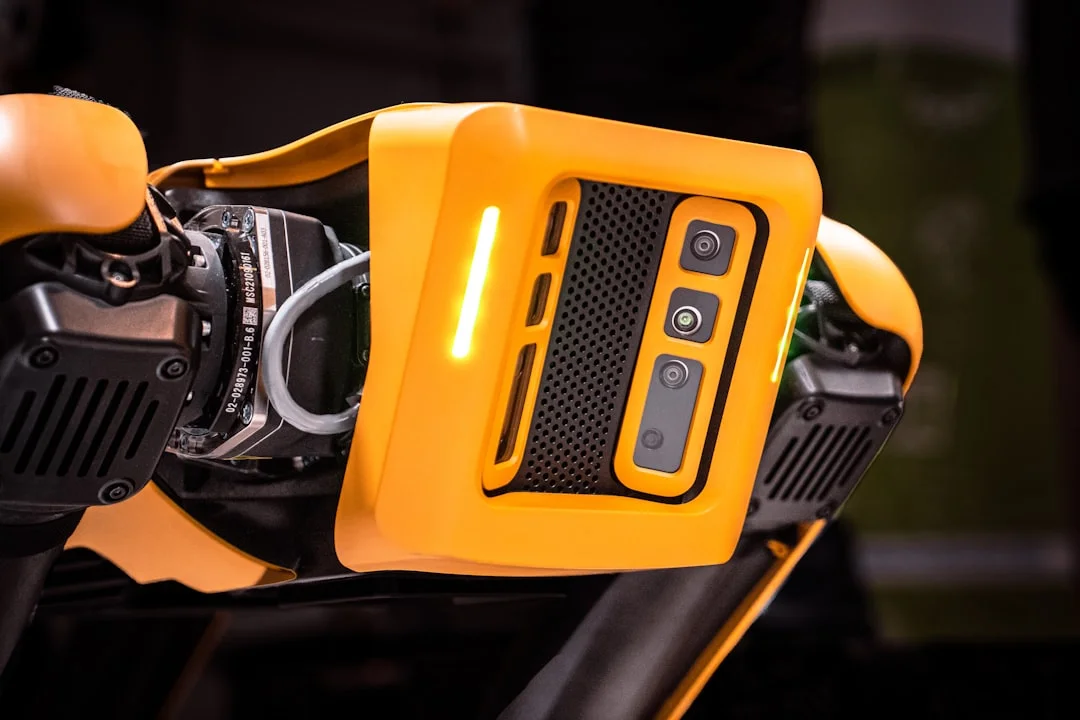
Voice AI for Construction Site Safety and Compliance 2026
Neutral, data-driven update on Voice AI for Construction Site Safety and Compliance 2026 and its impact on safety, compliance workflows, and field reporting.
The construction industry is entering a new era for safety and compliance, driven by voice-first technologies that translate spoken updates into actionable records in real time. On June 25, 2026, major safety and operations players began to unveil voice-enabled capabilities that promise faster hazard alerts, standardized field reporting, and more transparent safety governance on jobsites. This evolving landscape arrives at a moment when regulators and safety professionals are seeking better visibility into day-to-day field conditions, quicker incident response, and tighter documentation around OSHA requirements. For readers tracking Voice AI for Construction Site Safety and Compliance 2026, the news is clear: real-time, voice-driven safety workflows are moving from pilots to practice, with concrete capabilities that connect workers on the ground to reliable compliance records in the back office. This shift matters because it directly affects how hazards are identified, how quickly teams can respond, and how organizations demonstrate compliance during audits and reviews. Tech industry coverage of the June events highlights that automated hazard alerts, hands-free reporting, and voice-guided safety coaching are becoming standard features in enterprise-grade safety stacks. (techradar.com)
Beyond the headlines, several vendors are advancing these capabilities in ways that intersect with SaySo’s core strengths. For example, Vorsa AI is marketing AI-powered safety audits that turn site photos into OSHA-cited reports and offer a real-time voice coach to guide workers through trade-by-trade checklists. The Vorsa Coach walks the site with a voice-enabled assistant, auto-logging observations, and producing a comprehensive debrief in minutes, not hours. This approach aligns with a broader industry push toward on-site, voice-driven data capture that feeds into OSHA citations and safety documentation. (getvorsa.ai) In parallel, Zevro is promoting live voice logging that feeds directly into Procore by voice commands, with a three-step workflow designed to minimize the administrative burden of daily logs and reduce data-entry errors. That integration—log by voice, auto-structure the data, push to Procore in real time—speaks to a practical, on-site efficiency gain that construction teams can act on today. (zevro.io) Other platforms, such as SiteLogs and SiteVoice, are marketing voice-to-report capabilities that turn field notes into shareable daily logs, signaling a broader market move toward “voice-to-record” workflows that lower the barrier to timely, standardized documentation on site. (sitelogs.io)
Within this expanding ecosystem, SaySo stands out as a desktop voice-to-text platform designed to amplify on-site and back-office productivity with features tailored to construction workflows. SaySo emphasizes intelligent transcription with filler word removal, smart formatting that structures spoken lists and key points, auto-editing that detects self-corrections, and a personal dictionary for industry terminology. Importantly, SaySo supports 100+ languages with real-time translation and processes data locally, delivering zero data retention and privacy advantages that matter to teams handling sensitive, project-critical information. As the industry leans into more sophisticated, compliant reporting, SaySo’s on-device processing model positions it to be a practical backbone for SaySo voice-to-text and voice-enabled reporting across construction apps, emails, documents, and field checklists. (sayso.ai)
Section 1 — What Happened
Samsara's Beyond 2026 pushes two-way voice and AI safety tools into practice
Samsara, a leading provider of industrial IoT solutions, used its Beyond 2026 event in Las Vegas to unveil a multi-pronged safety and visibility upgrade for heavy equipment and on-site operations. The centerpiece was a new 360-degree camera designed for operated equipment, offering real-time situational awareness that helps safety managers track incidents from a birds-eye perspective. In addition, the company expanded its dash-cam platform to enable two-way voice capabilities, so dispatchers or AI agents can communicate with workers in the field without forcing workers to engage handheld devices. The broad aim is to deliver real-time alerts on weather, speed limits, or site-specific restrictions, while enabling rapid human–machine communication to prevent incidents before they occur. Tech press coverage from June 25, 2026 highlights these capabilities as a move toward “the next gear” in safety, with AI assisting operators and supervisors during critical tasks. The reporting emphasizes that two-way voice functionality allows more immediate, contextual responses when questions arise, a feature developers see as essential for frontline safety workflows. This is a tangible signal that voice-enabled safety automation is transitioning from pilot projects to mission-critical tools on major construction sites. (techradar.com)
Vorsa AI and other on-site voice safety tools gain momentum
Vorsa AI positions itself as an AI-powered safety solution that enables hazards to be logged with OSHA citations through both image analysis and a voice-guided workflow. The platform’s “AI Safety Coach” guides workers through site walks, logs observations automatically, and generates safety reports with OSHA citations, offering a dramatic reduction in the time required to produce compliant documentation. The product advertises more than 500 OSHA standards integrated into its analysis and 57 safety categories, underscoring the breadth of coverage in practical field use. A typical claim features a time-savings metric of “3+ hours per safety walk,” with a quick-start path that includes a 14-day free trial and tiered pricing (Starter, Professional, and Coach) designed to scale for individual supervisors to multi-site enterprises. This demonstrates how voice-enabled safety coaching and on-site reporting are becoming accessible to a broad range of teams, from single-foreman operations to regional safety programs. (getvorsa.ai)
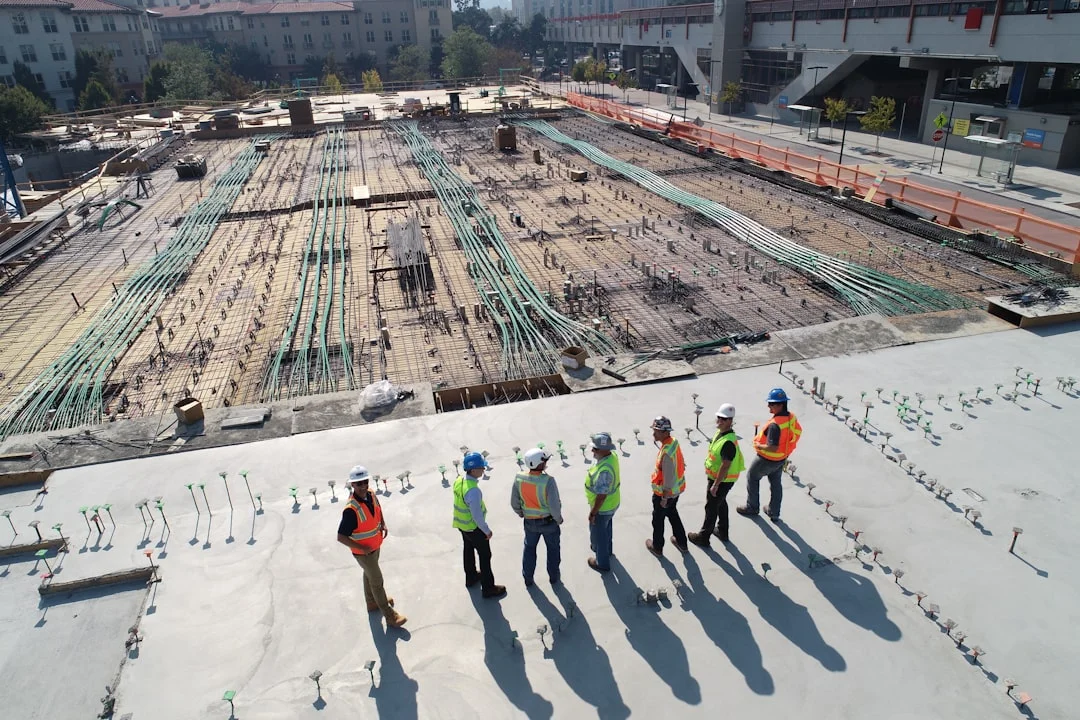
Photo by Scott Blake on Unsplash
Procore-integrated voice logging expands the field-data ecosystem
Zevro’s live-logging approach demonstrates how voice data can feed directly into major construction platforms. The company emphasizes logging with Siri triggers, parsing natural language into structured data, and pushing entries into Procore’s Daily Log in real time. The value proposition is clear: reduce the duplication of data entry, eliminate handwritten logs, and provide an auditable, voice-driven record that aligns with Procore’s project management workflow. The three-step process—Speak it, It logs it, Procore sync—illustrates the practical feasibility of voice-to-record on high-velocity jobsites and shows how integrated ecosystems can streamline field reporting and compliance documentation. (zevro.io)
Section 2 — Why It Matters
Real-time hazard alerts and structured compliance documentation matter for safety outcomes
The momentum around voice-enabled safety tools aligns with a long-running safety-improvement arc in construction. Real-time hazard alerts and voice-guided walks address a core safety objective: detect and communicate hazards before injuries occur. The GAO has documented that wearable technologies—an adjacent safety-tech vector—are being deployed to monitor worker safety and productivity, with the caveat that the evidence base for efficacy is still developing and concerns around privacy and cost exist. This context matters because voice-to-text safety workflows can complement wearables by capturing contextual narrative data (observations, near-misses, environmental conditions) into auditable reports quickly, while preserving worker privacy when processed locally. The GAO notes that while wearables show promise, data on their net safety impact remains limited, reinforcing the value of data-rich, voice-driven field documentation paired with formal OSHA reporting workflows. (gao.gov)
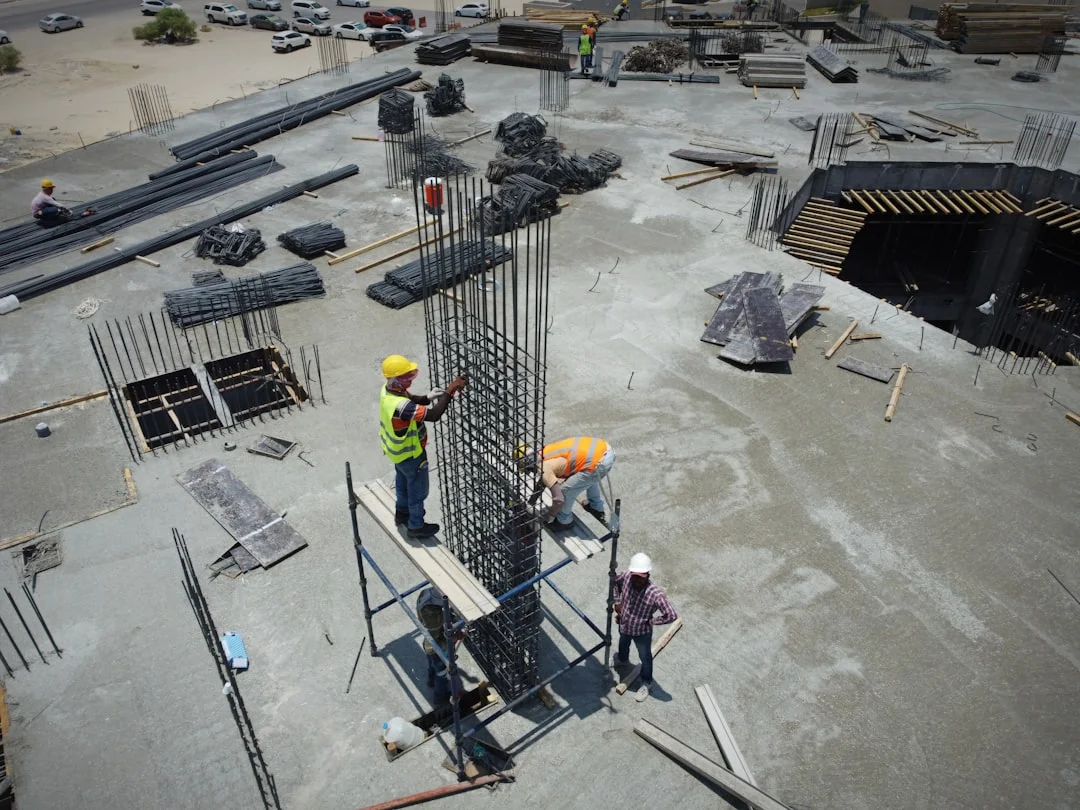
Photo by Glenov Brankovic on Unsplash
Privacy and data governance are central to adoption decisions
As construction teams adopt voice-native safety tooling, privacy and data governance rapidly become gatekeepers for broader deployment. GAO’s wearables study highlights concerns about privacy, data security, and cost that can hinder adoption, especially in organizations handling sensitive project information or regulated data. The shift to on-device processing—emphasized by SaySo in its enterprise-focused communications—addresses these concerns by keeping transcripts and voice data on premises, reducing external data exposure, and providing visibility controls for users and administrators. SaySo’s own materials describe 100+ language support with real-time translation, robust formatting and editing features, and a “local-first storage” model designed to minimize data retention, which directly responds to privacy considerations that are top-of-mind for safety managers evaluating digital tools on site. (gao.gov)
Impacts across roles and the broader compliance landscape
Voice AI on construction sites changes how different actors operate. Safety managers gain structured, auditable logs that can be converted into OSHA-compliant reports more quickly, with the potential for automated citations when observations match applicable standards (as shown by Vorsa’s OSHA-cited reporting flow). Foremen and field workers benefit from hands-free data capture, which reduces time spent on paperwork and lowers the risk of data-entry errors tied to end-of-day recall. This shift matters not only for safety performance metrics but also for regulatory audits, contract compliance, and insurance risk management. Industry observers note that the broader market is moving toward voice-to-record workflows that synchronize with existing project-management platforms, enabling a more holistic view of site safety, productivity, and compliance. (getvorsa.ai)

Photo by Siwawut Phoophinyo on Unsplash
Market dynamics and competitive landscape
The expanding set of voice-enabled safety tools on construction sites is part of a larger market trend toward integrated safety tech that blends hazard detection, real-time communication, and automated reporting. Samsara’s Beyond 2026 announcements, two-way voice, and AI-driven safety insights are part of a wave that includes niche players focusing specifically on voice-to-report functions (SiteLogs, SiteVoice) and risk zoning through voice-guided safety walks (Vorsa, Zevro). While the exact market share and performance outcomes will require longitudinal data, the current signals point to faster, more reliable safety documentation, shorter incident-response cycles, and improved cross-team collaboration between field crews and safety/compliance functions. (techradar.com)
Section 3 — What’s Next
Near-term trajectory for 2026–2027: scaling and maturation
Industry watchers expect voice AI for construction safety and compliance to accelerate through 2026 and into 2027 as vendors broaden capabilities, deepen platform integrations, and offer more granular analytics on hazard patterns and compliance gaps. The immediate next steps will likely include deeper Procore and ERP integrations, expanded coverage of OSHA-referenced checklists, and more robust on-site voice coaching that can adapt to different trades and jobsite configurations. Vendors like Vorsa AI demonstrate a clear path with on-site coaching and rapid report generation, while Zevro highlights the benefits of seamless Procore integration that reduces double data-entry tasks. Expect more suppliers to pair voice-to-record workflows with wearable data and environmental sensors to deliver end-to-end safety documentation pipelines. (getvorsa.ai)
What organizations should watch for in 2026–2026 and beyond
- Regulatory alignment and audit readiness: As OSHA and state safety agencies continue to emphasize hazard recognition and documentation quality, voice-driven safety logs that automatically cite standards can support audit readiness. This is already visible in platforms that embed OSHA citations directly into the generated reports, which can simplify regulatory reviews and insurance assessments. The GAO’s wearable technologies note underscores the importance of standardized, auditable data when evaluating new safety tech in the field. (getvorsa.ai)
- Privacy controls and data governance: Enterprises will demand transparent, privacy-centric architectures. SaySo’s emphasis on local processing and zero data retention positions it well in markets where data sovereignty and employee privacy are paramount. As more tools add real-time translation and multilingual support, cross-border teams will rely on on-device processing to protect sensitive information while maintaining productivity. (sayso.ai)
- Interoperability and data silos: The next wave will likely focus on deeper interoperability among voice-to-text, safety coaching, daily logs, and project-management systems. Platforms already demonstrating Procore integrations point to a future where safety observations, field notes, and incident reports flow bidirectionally across the tech stack, reducing re-entry burdens and enabling faster decision-making. (zevro.io)
What’s next also means watching how pricing and access evolve. Vorsa AI’s tiered pricing and 14-day free trials illustrate a go-to-market approach that lowers the barrier to trial for safety teams and operations groups. As more vendors enter the space, organizations may adopt a blended approach—using SaySo for high-volume transcription and formatting tasks, while leveraging Vorsa’s safety-coaching and OSHA-citation capabilities for formal documentation. The overall effect should be more consistent, auditable, and efficient safety documentation workflows across projects of all sizes. (getvorsa.ai)
Closing
As SaySo observes, Voice AI for Construction Site Safety and Compliance 2026 is less about a single revolutionary gadget and more about a foundational shift in how frontline teams capture, interpret, and act on safety information. The convergence of real-time hazard alerts, voice-driven field reporting, and seamless compliance documentation marks a practical evolution for safety programs that prior relied on paper checklists and post-hoc note-taking. With major players demonstrating on-site voice coaching, hands-free logging, and live data synchronization to platform backbones like Procore, the industry is establishing a disciplined, data-driven approach to safety that can scale across sites and projects.
For readers seeking concrete, on-the-ground value, the path is clear: pilot, measure, and scale with a privacy-forward, linguistically versatile toolchain that keeps data local where possible while enabling rapid translation and cross-team collaboration. SaySo, in particular, offers a compelling combination of native voice-to-text capabilities, intelligent formatting, and on-device processing that can integrate with the tools safety teams already rely on. As construction sites grow more complex and regulatory expectations tighten, a well-implemented voice AI strategy—anchored by SaySo and a growing ecosystem of safety-focused voice tools—can help ensure hazards are identified, compliance records are robust, and field reporting is timely and accurate. The future of safer, smarter job sites is being written in real time, one voice note at a time, and the industry is listening. For teams seeking to explore practical implementations, SaySo is available at SaySo (link: https://sayso.ai), offering a local-first transcription platform designed to work across apps, with support for SaySo voice-to-text workflows, real-time translation, and a personal dictionary for industry terminology. (sayso.ai)
Author
2026/06/28


