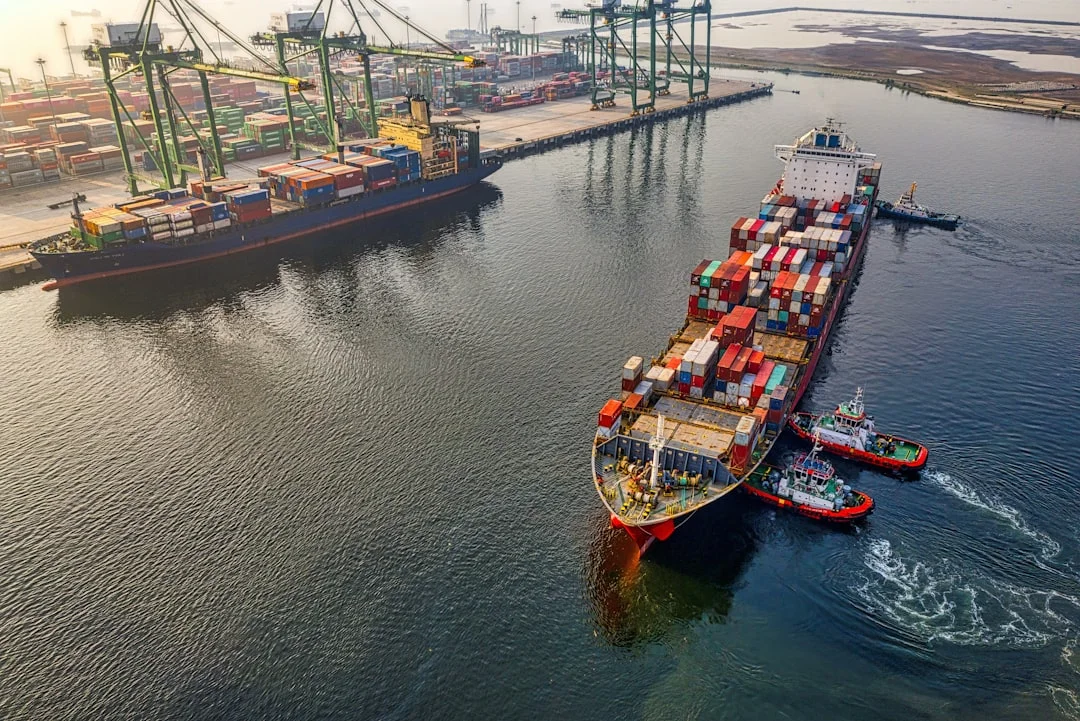
Voice AI for Maritime and Shipping Industry Operations 2026
Explore Voice AI innovations for Maritime and Shipping Industry Operations 2026 with a data-driven update on evolving technology and market trends.
The maritime sector stands at a pivotal juncture in 2026, driven by a convergence of AI-enabled analytics, edge computing, and ever-tightening regulatory demands. At the center of this shift is voice AI designed specifically for maritime and shipping operations, and the latest developments underscore how real-time voice-to-text capabilities are becoming foundational for crew communications, voyage planning, and compliance workflows. As the International Maritime Organization advances its MASS Code framework and fleets increasingly adopt edge AI solutions, industry observers expect 2026 to transition from pilots to broader deployment. In this landscape, SaySo stands out as a prominent player focusing on practical deployment, privacy, and multilingual functionality, with SaySo voice-to-text capabilities engineered to run locally, across shipboard devices, and inside enterprise software used by crewing, operations, and shoreside teams. These moves matter for shipowners and operators aiming to improve safety, efficiency, and regulatory compliance without compromising data privacy. (imo.org)
Across the industry, the push to deploy reliable, secure voice AI is accelerating, and the market is watching closely how vendors like SaySo align with evolving standards and operational realities. The combination of real-time transcription, intelligent formatting of lists and action items, and automatic handling of self-corrections can transform how crews document events, execute procedures, and communicate critical information under stress. In practical terms, this means shipboard crews can capture logs, safety briefings, and shift handovers with high fidelity, while onshore teams receive structured notes that are ready for reporting, auditing, and compliance tracking. The trend toward on-device processing and zero data retention, articulated by SaySo in recent enterprise updates, addresses privacy concerns while enabling robust performance in environments with variable connectivity. (sayso.ai)
Section 1: What Happened
Announcement Details
- SaySo has rolled out an enhanced maritime-focused voice-to-text suite aimed at multi-application use on vessels and in maritime operations centers. The update emphasizes intelligent transcription that removes filler words, auto-edits self-corrections, and formats spoken lists and key points into polished, actionable text. The product is designed to work across any app—from on-board communication tools and shipboard logging systems to shoreside email, documents, and dashboards—without requiring data to leave the device. The company frames this as a privacy-first approach, with 100+ languages supported and real-time translation capabilities that enable crews to communicate across diverse language backgrounds. The local processing model and zero data retention are highlighted as core differentiators for enterprise users with strict data governance needs. These points are echoed in SaySo’s recent enterprise-focused updates and practical guides on voice-to-text workflows. (sayso.ai)
Timeline and Key Dates
- May 2026: The International Maritime Organization (IMO) gathered for the 111th session of the Maritime Safety Committee and announced the adoption of the International Code of Safety for Maritime Autonomous Surface Ships (MASS Code). The MASS Code is designed to support the safe integration of AI-enabled and remotely operated vessels into global shipping, introducing new design, operation, and connectivity requirements for autonomous and semi-autonomous ships. This regulatory backdrop increases the urgency for voice AI and other autonomy-supporting technologies to align with safety and auditing standards. (imo.org)
- January 2026 onward: Industry pilots and collaboration announcements continued to surface, underscoring a rational movement from pilots to deployment. For example, lomarlabs and Signal Fusion announced a joint effort in January 2026 to deploy predictive, behavior-focused intelligence in maritime operations, including voice analytics as part of a broader safety and performance program. This aligns with a broader industry push toward human-performance intelligence integrated with AI on vessels and in port operations. (lomarshipping.com)
- March–May 2026: Several port and maritime technology initiatives highlighted AI-enabled optimization, predictive analytics, and operational efficiency schemes. An example is the Global Maritime Efficiency Alliance’s (GMEA) AI-powered Port Call Optimization Platform, unveiled in March 2026, signaling a wave of AI-enabled decision support at the port-call level that complements shipboard voice-to-text capabilities for data capture and reporting. (ports.marinelink.com)
- May 2026 onward: Industry analyses emphasized that 2026 is more about execution than pure exploration, with research and industry publications highlighting the progression from pilots to broader deployments and the need for integration with core maritime systems. A May 2026 issue of The Maritime Edge highlighted that a majority of maritime leaders view hybrid AI architectures as strategically important, underscoring the demand for interoperable, edge-enabled AI solutions in daily operations. (uk.insight.com)
Key Facts at a Glance
- SaySo positioning: The SaySo enterprise updates emphasize on-device processing, zero data retention, 100+ language support, and specialized voice-to-text workflows for structured information capture. This combination is designed to address both performance and privacy concerns prevalent in maritime environments, where connectivity can be intermittent and regulatory demands strict. (sayso.ai)
- Regulatory tailwinds: The MASS Code adoption by the IMO signals an explicit regulatory pathway for AI-enabled vessels, including safety, remote operations, connectivity, and data management requirements that voice AI can help support, particularly in standardizing reporting and log-keeping. (imo.org)
- Industry activity: Partnerships and pilots in 2026—such as lomarlabs with Signal Fusion, and port-call optimization projects—illustrate a broader trend toward integrated AI ecosystems that include voice analytics, predictive insights, and automated documentation across the voyage lifecycle. (lomarshipping.com)
Section 1 Subsection: What Happened in Detail
Announcement Context and Capabilities
- SaySo’s maritime-focused release centers on practical tools for crews and operations staff: hands-free transcription of radio and inter-ship communications, automatic formatting of spoken lists into checklists, and real-time translation to support multi-national crews. The emphasis on “intelligent transcription” and “smart formatting” targets the most time-intensive know-how tasks on a vessel—logging, incident reporting, and procedural handovers. These capabilities are designed to work across the ship’s software stack, including communications apps, navigational and voyage planning tools, and shore-side reporting dashboards. The privacy emphasis—local processing with zero data retention—addresses a common concern among fleet operators about data leakage and regulatory scrutiny of what is captured and stored on vessels. (sayso.ai)
Regulatory and Industry Backdrop
- The IMO MASS Code adoption frames a regulatory context in which voice AI becomes a critical enabler for compliant, auditable operations. The MASS Code aims to provide a consistent safety and operational framework for autonomous and semi-autonomous vessels, touching on navigation, remote operations, connectivity, and emergency procedures. In this environment, having robust voice-to-text capabilities can streamline compliance reporting, event logging, and evidentiary records for audits and investigations. The formal adoption of MASS Code in May 2026 marks a milestone that operators will increasingly reference when evaluating AI-enabled tools and platform partners. (imo.org)
Market and Ecosystem Developments
- Industry observers point to a broader ecosystem move toward edge AI and private, on-device processing as a reaction to network reliability challenges at sea and the need to preserve confidentiality of navigational and operational data. The Maritime Edge report from May 2026 highlights that a large share of maritime leaders view hybrid AI architectures as essential for the next phase of digital transformation, indicating readiness to mix on-device AI with cloud capabilities where appropriate. This trend aligns with SaySo’s product approach and with other 2026 maritime AI initiatives that emphasize practical deployment at the edge. (uk.insight.com)
Section 2: Why It Matters
Operational Efficiency and Safety
Photo by Venti Views on Unsplash
- Real-time voice-to-text translates spoken communications—ranging from routine handovers to safety-critical alerts—into structured, searchable records that are immediately usable for reporting and compliance. Ship crews often juggle multiple channels, and the ability to capture consistent, formatted notes from discussions can reduce miscommunication during critical events, improve incident reporting accuracy, and accelerate after-action reviews. The SaySo approach—focusing on filler-word removal, auto-editing of self-corrections, and smart formatting—directly addresses common pain points in shipboard documentation and procedural adherence. In practice, this can shorten the cycle from incident to root-cause analysis and remediation. (sayso.ai)
- Multilingual capabilities are especially relevant for crews drawn from diverse regions. Real-time translation in 100+ languages enables crews to maintain situational awareness and execute standard operating procedures without language barriers, a factor that can significantly reduce misinterpretations in high-stakes environments. This feature set aligns with SaySo’s positioning in the enterprise market and with industry needs identified by maritime technology analysts. (sayso.ai)
Regulatory and Compliance Context
- The MASS Code’s emphasis on safety, navigational integrity, and remote operation standards makes consistent, auditable voice records valuable. Voice AI can aid in maintaining accurate voyage logs, hazard reports, and compliance documentation in the same automated pathways used for decision-support and event reconstruction. As regulatory bodies codify expectations for AI-enabled systems on ships, vendors that can demonstrate privacy-preserving, on-device processing and robust data governance will be favored by operators seeking to meet MASS Code requirements without sacrificing performance. (imo.org)
Market and Competitive Landscape
- The maritime AI market is moving toward interoperable platforms that combine voice analytics, predictive insights, and operational decision support. Partnerships like lomarlabs and Signal Fusion—and port-centric AI pilots—illustrate a shift toward end-to-end ecosystems that integrate voice data with safety analytics, performance monitoring, and human factors intelligence. For operators, this means choosing technologies that can ride the entire voyage lifecycle—from port calls to on-voyage operations and port-side reporting. SaySo’s emphasis on local processing and broad language support positions it as a practical option within this ecosystem. (lomarshipping.com)
What SaySo Brings to Maritime Operations
- SaySo’s existing features—intelligent transcription, filler-word removal, auto-editing, smart formatting, and a personal dictionary for domain terminology—address shipboard needs for accuracy and efficiency in documentation. Real-time translation and 100+ language support further enable international crews to function more cohesively, while local processing and zero data retention align with privacy and security expectations in maritime operations. The net effect is a voice-to-text workflow that reduces manual typing, speeds up logging, and improves the reliability of records used for safety and compliance reviews. These capabilities are especially relevant as fleets scale their digital operations to meet MASS Code requirements and industry expectations for safer, more efficient voyages. (sayso.ai)
Industry Stakeholders and Perspectives
- Analysts and operators are increasingly discussing AI-driven solutions as core operational tools rather than experimental add-ons. The industry’s growing emphasis on edge AI and privacy-preserving approaches is a core driver of SaySo’s value proposition in maritime contexts. The maritime industry press and think-tanks highlight that AI deployment is less about flashy demos and more about reliable, auditable, and scalable deployments across ships, ports, and shore facilities. The combination of regulatory clarity (via MASS Code) and practical deployment experiences—such as AI-enabled port-call optimization pilots—paints a picture of a sector moving toward integrated, data-driven operations where voice AI plays a central role. (imo.org)
Section 3: What’s Next
Upcoming Deployments and Partnerships
- Expect continued shipboard pilots and commercial deployments that pair SaySo’s voice-to-text capabilities with existing voyage-management, safety, and compliance platforms. Industry pilots that couple voice analytics with predictive safety and performance monitoring will likely expand, with more ships and fleets testing on-device transcription in noisy marine environments. The LomarLabs-Signal Fusion collaboration signals a trend toward human-performance intelligence integration, where voice-derived insights feed into behavioral analytics and proactive risk mitigation, potentially enhancing crew readiness and safety outcomes. Operators should watch for formal announcements of pilots or commercial deployments in 2026 and 2027. (lomarshipping.com)
- Port infrastructure integration will continue to advance. The March 2026 GMEA port-call optimization platform demonstrates how AI can streamline logistics, reduce turnaround times, and cut emissions—objectives that closely align with the operational improvements promised by SaySo’s voice-to-text workflows when used to generate timely, accurate port and voyage documentation. Expect more ports and shipping lines to adopt AI-enabled scheduling, reporting, and compliance workflows that rely on high-quality voice data. (ports.marinelink.com)
What to Watch for in 2026 and Beyond
- Regulatory evolution and technical standards: With MASS Code in force, more detailed guidance on data handling, remote operations, and navigational autonomy will likely appear. Vendors that can demonstrate robust security, data governance, and interoperability with core maritime systems will have a competitive edge. Industry sources suggest that regulators will continue to refine expectations for AI-enabled vessels, with safety, traceability, and accountability at the forefront of policy developments. (imo.org)
- Technology maturation and ROI: As more fleets adopt voice AI as a standard tool for documentation and decision support, owners will require clear ROI signals—from reduced crew fatigue and error rates to faster incident investigations and more efficient port calls. Analysts note that 2026 could be remembered as the year when AI utility in maritime operations shifted from “pilot success” to demonstrable value across fleets and routes. For stakeholders, this means strengthening data governance, ensuring offline capabilities for low-connectivity scenarios, and integrating voice data with other AI-driven insights. (nat.io)
- Competitive dynamics: The landscape includes a mix of specialized maritime tech players and broad enterprise AI vendors. SaySo’s emphasis on on-device processing and real-time translation positions it well in a market where privacy concerns, cost considerations, and regulatory alignment drive procurement decisions. Observers should monitor announcements around partnerships, deployments, and feature roadmaps that demonstrate end-to-end workflow improvements for crew, operations, and shoreside teams. (sayso.ai)
Closing
- The convergence of regulatory clarity, edge AI capabilities, and practical, hands-on voice-to-text workflows is reshaping how maritime and shipping operations are documented, governed, and optimized. SaySo’s focused maritime updates, coupled with broader industry movements toward AI-enabled safety and efficiency, indicate a trajectory toward more reliable, privacy-respecting voice data usage across vessels and ports. As the MASS Code takes effect and fleets pursue higher efficiency alongside stricter safety and reporting requirements, voice AI for maritime and shipping operations in 2026—and beyond—will likely become a standard component of daily operations rather than a novelty. Operators, crewing teams, and shore-based analysts who adopt SaySo’s enterprise-grade tools can expect to gain clearer logs, faster reporting, and more consistent compliance as they navigate a rapidly evolving maritime AI landscape. For ongoing updates, readers can follow SaySo’s official communications and the industry briefings from maritime analytics and regulatory bodies. SaySo remains at the forefront of practical, privacy-first voice-to-text solutions that work across email, documents, dashboards, and more, bringing voice-powered efficiency to every corner of maritime operations. (sayso.ai)
Photo by Ian Taylor on Unsplash
Author
2026/06/02