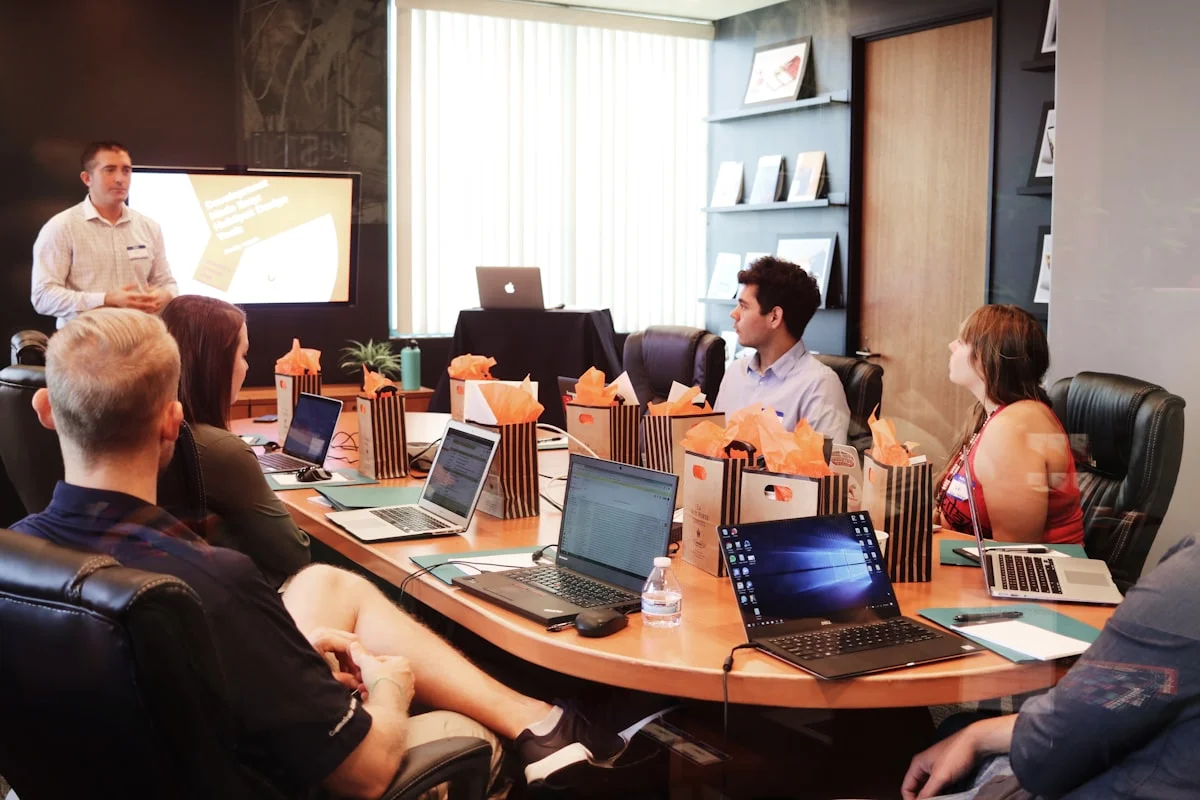
Voice AI in Education 2026: Classroom Assistants Emerge
Get neutral, data-driven coverage of Voice AI in Education 2026, highlighting classroom deployments, benefits, and potential challenges faced.
The newsroom-style briefing on Voice AI in Education 2026, issued by SaySo, presents a data-driven view of how classroom and enterprise training deployments are evolving. It emphasizes practical outcomes from real-world deployments, including enhanced transcription quality, smarter formatting of notes and lists, and multilingual support, all while prioritizing privacy through local processing. The focus is on education and training contexts where voice-to-text workflows can cut administrative load, accelerate lesson planning, and support inclusive learning environments. SaySo frames this moment as a turning point where voice-first workflows increasingly underpin classroom documentation, educator communication, and student engagement strategies. For readers seeking concrete numbers, the briefing aggregates market signals, classroom pilots, and governance practices to map a clear path forward for 2026. SaySo’s analysis also highlights the ongoing tension between cloud-based and edge-based models, with a growing interest in hybrid approaches that balance latency, cost, and privacy. SaySo’s perspective is grounded in the broader market context and supported by industry analyses and policy developments that influence how schools adopt voice AI technologies. To stay updated on SaySo developments and the broader landscape of Voice AI in Education 2026, view SaySo’s newsroom-style updates and consult the OECD, Gartner, and major market analyses referenced in the briefing. SaySo provides the underlying voice-to-text platform powering these insights.
The briefing notes a wave of AI-enabled education initiatives and policy changes shaping 2026. In the United States, several state and federal initiatives emphasize AI literacy, teacher training, and responsible use of AI tools in schools; for example, the policy push in states like Ohio requires AI-related governance within school districts by mid-2026, signaling a broader trend toward formalizing AI adoption in education. These policy developments are paired with a surge of AI training programs for educators funded by major technology players, reflecting a shift from experimentation to scale. The data-driven narrative draws on recent industry reporting and policy briefings that describe how districts are budgeting for voice-enabled tools, how teachers are being prepared to integrate AI into lesson planning, and how schools balance innovation with privacy and equity concerns. The convergence of policy momentum and classroom experimentation creates a near-term horizon in which Voice AI in Education 2026 becomes a measurable driver of teaching and learning improvements. For context, in 2025, major players announced substantial investments in AI education training, underscoring the urgency of equipping teachers with AI-enabled tools. Axios provides coverage of state policy timelines, and Time Magazine outlines the broader funding landscape shaping educator access to AI-based training. The UNESCO mother-tongue and multilingual education framework further highlights the importance of language-aware AI in diverse classrooms. UNESCO report underscore how technology can support multilingual education, a point echoed in SaySo’s emphasis on 100+ language support and real-time translation in its toolkit. (axios.com)
What Happened
Announcement details
The SaySo briefing on Voice AI in Education 2026 documents a rapid expansion of voice-enabled workflows in classrooms and training environments. According to SaySo, production deployments surged in late 2025 and into 2026, driven by improvements in real-time speech processing and governance capabilities that let schools scale voice-to-text across departments, courses, and administrative tasks. Independent research cited within the analysis indicates substantial acceleration in enterprise deployments as well, with industry observers noting that many districts are piloting or expanding voice-first initiatives to support teachers, students, and staff. The briefing also notes a notable shift from "can we automate" to "how do we scale robust, compliant voice AI across the organization," signaling a strategic reframing of voice technology as a platform rather than a point solution. The SaySo post ties these observations to broader market signals, including a rising emphasis on licensing, governance, and brand trust in voice experiences. For readers who want to see the latest market data in one place, the SaySo synthesis points to trusted industry sources and company reports that map the 2026 landscape. See the SaySo insights and cited sources in the official update, which anchors its conclusions in market measurements and governance best practices. SaySo article: 2026 voice AI trends and enterprise adoption. (sayso.ai)
Timeline highlights
Key milestones highlighted in the SaySo briefing include:
- January 28, 2026: Voices released Amplified 2026, a state-of-voice report framing voice AI as an emerging quality standard for enterprise-grade solutions. The report compares consumer adoption with enterprise readiness, highlighting a sizable adoption gap that informs enterprise pacing and governance. This timing aligns with SaySo’s emphasis on governance-first deployment in 2026. (sayso.ai)
- 2025: Independent AI Voice Research reports a surge in production voice agent deployments across Fortune 500 companies, with a 340% year-over-year increase and a notable 42% reduction in average handle time (AHT) in voice-enabled interactions. These results illustrate the practical productivity gains that SaySo’s readers can expect as voice-first workflows mature. (sayso.ai)
- 2025–2028: Market sizing points to a multi-year expansion of the global voice agent market, with multi-stakeholder sources projecting strong growth and expanding use cases across financial services, healthcare, and education. The SaySo briefing situates education within this broader expansion, noting the value of production deployments and governance in education and enterprise contexts alike. (sayso.ai)
Tech approach and privacy commitments
The SaySo briefing emphasizes a technology strategy that blends real-time, edge- and cloud-based processing, with an apparent preference by many organizations for hybrid architectures to balance performance, privacy, and cost. In parallel, SaySo highlights 100+ language support with real-time translation, smart formatting for lists and key points, and an auto-editing capability to correct self-initiated edits, all while ensuring local processing to preserve privacy—an important differentiator in education and enterprise contexts. These design choices address classroom realities where data sensitivity is high, and where multilingual classrooms demand robust cross-language support. The SaySo framework aligns with broader industry themes around governance and licensing that are also discussed in market analyses. [SaySo blog and related pieces] and [UNESCO multilingual education framework] provide context for how language access and data privacy intersect in 2026. (sayso.ai)
"The difference won’t be speed or cost—it will be whether voices sound real, trustworthy, and human." This statement from SaySo’s leadership underscores the central role of voice quality and licensing in enterprise deployments, a theme echoed by independent industry observers in Amplified 2026 and related market research. The emphasis on authentic voices, licensing provenance, and governance structures signals a maturation of the voice AI market beyond mere transcription accuracy toward trustworthy, compliant, enterprise-scale programs. (sayso.ai)
As for the broader education-specific implications, Think of Voice AI in Education 2026 as a snapshot of a market migrating from pilots to scale, with schools balancing the benefits of automated transcription, multilingual support, and smart formatting against concerns about privacy, equity, and governance. In particular, the alignment with multilingual education strategies—an area where UNESCO highlights ongoing global importance—provides important context for educators designing inclusive classrooms and administrators planning for district-wide rollouts. The intersection of voice technology with multilingual education and governance is a recurring theme across SaySo’s updates and similar analyses. (sayso.ai)
Impact on Customer Experience and Return on Investment
The mainstreaming of voice AI in 2026 is shifting the conversation from “can we automate?” to “how much business value can we unlock with voice-driven workflows?” SaySo’s data-backed findings show production deployments delivering measurable gains where volume and complexity justify a centralized platform approach.
See the SaySo analysis →
Why It Matters
Economic impact and educational ROI

Photo by Ali Shah Lakhani on Unsplash
Voice AI in Education 2026 sits at the nexus of growing demand for personalized learning, administrative efficiency, and budget-conscious education leadership. Market analyses referenced by the SaySo briefing point to a broader EdTech growth trajectory, with AI-enabled education tools expected to contribute to a multi-decade expansion of technology-enabled learning. This includes the practical ROI of voice-enabled workflows—faster note-taking, more consistent documentation, and improved accessibility for students who benefit from real-time transcription and translation. Market projections cited in education technology research indicate that AI-powered education tools will be a meaningful portion of the sector’s growth, with education-specific use cases expanding beyond classroom transcription to include exam preparation, curriculum design, and staff communications. Such trends reinforce why SaySo emphasizes platform-level adoption and governance, not just point solutions. For readers seeking corroborating market context, consider the 2026 market-size projections for AI in education and related EdTech growth analyses. (globenewswire.com)
Policy, privacy, and governance implications
The shift toward formal AI governance in education is reflected in policy developments and the broader governance discourse around voice AI. The Ohio policy timeline, pushing districts to adopt AI-use policies by mid-2026, exemplifies how regulators are turning attention to AI usage in schools. As districts prepare for these requirements, vendors and school leaders must align procurement with governance frameworks that address data residency, retention, and transparency. The development of teacher AI training hubs and the broader push to equip educators with AI literacy, as reported in 2025 and 2026 coverage, also indicates a policy and funding environment that supports responsible AI adoption rather than blanket deployment. SaySo’s emphasis on local processing and zero data retention aligns with privacy-centric design practices that many school districts are prioritizing in 2026. (axios.com)
Equity and multilingual access
Multilingual capabilities are more than a convenience; they are a pathway to more equitable access to education and professional opportunities. UNESCO’s focus on mother-tongue-based multilingual education highlights the critical role technology can play in enabling learners to access content in their first language or strongest language, while SaySo’s 100+ language support and real-time translation address practical classroom needs. In diverse classrooms, voice AI can reduce language barriers in notes, assignments, and communications with families, provided strong governance and privacy protections are in place. The SaySo briefing explicitly connects multilingual capabilities with scalable, governance-minded deployment strategies, aligning technology choices with equity goals in education. Once voice content is transcribed, educators can use tools like Kuse’s AI notes generator to further organize spoken content into structured study materials, and Kuse’s text formatter to clean up transcription output for classroom distribution. (unesco.org)
Strengthen Classroom Transcriptions with SaySo
See how SaySo voice-to-text handles multilingual classrooms and real-time translation to support diverse learners.
See How It Works →
Adoption dynamics and who benefits
The SaySo analysis identifies the primary beneficiaries as education administrators, teachers, and students in high-volume or high-stakes learning contexts where accurate, timely, and policy-compliant transcriptions are transformative. Financial services and healthcare are highlighted as early-adopter sectors for production voice agents, but education is positioned as a major growth area given the high need for scalable documentation, accessibility, and multilingual support. The governance and licensing emphasis in Amplified 2026, Parloa’s trends, and related industry analyses shapes a practical blueprint for education buyers seeking reliable ROI while conforming to regulatory expectations. The bottom line: education institutions that treat voice AI as a platform—investing in governance, standardized language support, and cross-department integration—stand to realize the most durable value. (sayso.ai)
What’s Next
Roadmap for 2026 and beyond
SaySo’s forward-looking section outlines near-term actions for enterprise and education leaders. The guidance centers on treating voice AI as a platform investment rather than a point solution, emphasizing the establishment of internal centers of excellence to coordinate voice agent development across schools and departments. Latency and voice quality remain critical: sub-500ms responses are associated with higher satisfaction, while latency creeping toward 800ms tends to erode user experiences. The plan also stresses hybrid architectures that combine voice automation with human governance to maintain high containment rates on complex tasks. For readers planning to monitor 2026 developments, these roadmaps suggest paying attention to governance dashboards, language-specific targets, and data-residency policies that培训 support scalable deployments. (sayso.ai)
Multilingual and multimodal expansion timelines
Multilingual-by-default and multimodal experiences are expected to be foundational for global education deployments. SaySo’s coverage emphasizes the need for scalable language support across markets and consistent user experiences across languages, alongside cross-modal capabilities that integrate voice with text, visuals, and other modalities. In educational settings, this translates to tools capable of real-time translation for multilingual classrooms, language-aware transcription, and adaptive feedback across languages. The broader industry signals—through Parloa, CubeRoot, and other platform providers—point to a multi-year expansion in which language inclusivity and cross-channel continuity are not optional but expected standards. (sayso.ai)
Multilingual orchestration and cross-market consistency
As education and enterprise deployments scale, language-aware governance and branded voice strategies become central to reliable student experiences across districts and global campuses.
SaySo
Real-time orchestration and education-system integration milestones
Real-time orchestration—routing, automating, or escalating tasks based on live signals—emerges as a key trend for 2026 and beyond. Education deployments will increasingly require integration with student information systems, LMS platforms, and classroom devices, enabling end-to-end voice-enabled workflows from lecture transcription to assessment documentation. The SaySo briefing notes that central orchestration layers will enable consistent orchestration across devices and platforms, a pattern mirrored in other industries and now migrating into education. Expect more API-first architectures and plug-ins for existing education tech stacks, with more robust metrics for automation containment, learning outcomes, and teacher time savings. (sayso.ai)
Real-time orchestration and enterprise integration milestones
Institutions will implement API-first architectures to link voice workflows with LMS, ERP, and student information systems, enabling end-to-end voice-enabled classroom and administrative tasks.
See How It Works →
The education technology landscape to watch
Looking ahead, expect continued attention to governance, licensing, and the ethical dimensions of voice data in education. The Amplified 2026 report and SaySo’s synthesis underscore that the most successful deployments will combine high-quality voice output with transparent licensing, auditable logs, and clear disclosures about data usage. In education, this translates to clearer policies for teachers and students, more robust privacy protections, and a focus on accessibility and inclusion. The UNESCO multilingual education context reinforces that language access must be part of any reliable classroom voice strategy. For practitioners, the key watchpoints include language coverage per classroom, policy alignment with district and state requirements, and the ability to measure learning impact from voice-enabled workflows. (sayso.ai)
Closing
As SaySo compiles the 2026 landscape of Voice AI in Education, the news is that classrooms and training programs are moving beyond isolated experiments toward scalable, governance-aware, multilingual voice workflows. This shift promises tangible benefits in documentation efficiency, accessibility, and instructional design, while also presenting clear responsibilities around privacy, licensing, and transparency. Districts, schools, and corporate training teams that approach voice AI as a strategic platform—one that coordinates language, context, and governance—will be best positioned to realize meaningful improvements in student outcomes, teacher effectiveness, and operational efficiency. The next 12–24 months will be a pivotal period for education leaders to align procurement, policy, and pedagogy with the evolving capabilities of SaySo and other leading voice AI platforms. For ongoing updates on Voice AI in Education 2026, including language support expansions, real-time translation enhancements, and governance innovations, Stay tuned to SaySo’s newsroom and blog updates, as well as trusted market analyses from UNESCO, Axios, Time, and industry researchers. SaySo continues to publish data-driven coverage and practical guidance for educators and knowledge workers seeking to harness voice-to-text technology responsibly and effectively.

Photo by Haseeb Modi on Unsplash
In education, the integration of voice AI is not just a productivity upgrade—it’s a pathway to more inclusive, responsive, and evidence-based teaching and administration. The 2026 trajectory points to a future where SaySo and peers deliver privacy-preserving, multilingual voice-to-text capabilities that teachers can rely on every day to focus on what matters: students learning and succeeding. As this landscape evolves, educators and administrators should monitor policy developments, performance metrics, and language support roadmaps to maximize the value of voice-enabled learning environments. SaySo will continue reporting on 2026 developments, with benchmarks from OECD, Gartner, and other authorities to provide reliable context for decision-makers. (sayso.ai)
Want to see how this translates to your district or classroom?
Explore hands-on demonstrations and multilingual transcription capabilities with SaySo to pilot voice-to-text in your workflows.
Try It Free →
Author
2026/04/17