Voice AI in Agriculture and Precision Farming 2026: Updates
Explore Voice AI in Agriculture 2026 with insights on field intelligence, multilingual capture, and farm-to-fork traceability in precision farming.
The agriculture sector is entering a new era of data capture and real-time decision making, driven in large part by advances in voice-enabled AI. On June 15, 2026, SaySo published a data-driven briefing focused on Voice AI in Agriculture and Precision Farming 2026, examining how field intelligence, multilingual data capture, and farm-to-fork traceability are evolving as core capabilities. The report pulls together early pilots, regulatory considerations, and workforce dynamics to explain why growers and agribusinesses are increasingly turning to voice-first solutions to manage crops, livestock, and supply chains more efficiently. This development matters because it signals a shift from reactive data entry to proactive, hands-free data capture—especially in environments where workers contend with weather, moisture, dust, and long hours. The briefing also situates SaySo within a broader ecosystem of voice-enabled agritech, highlighting practical pathways for farms to integrate voice-to-text workflows across apps, from field notes to ERP systems. (sayso.ai)
Beyond SaySo’s coverage, the broader industry context reinforces why this is trending in 2026. Labor shortages in farming, aging workforces, and the need for more timely field data are driving rapid interest in voice-first tools. A recent analysis of agriculture labor patterns in early 2026 shows farm employment in the United States at approximately 2.184 million in February 2026, down about 22,000 from five years earlier, with 38% of U.S. farmers aged 65 or older. Analysts argue this demographic shift makes hands-free, immediate data capture not just convenient but essential for maintaining productivity and accuracy on busy farm days. Meanwhile, technology publications highlight that AI-powered voice capabilities are moving from novelty to baseline infrastructure for field operations and supply-chain decisions. These threads collectively set the stage for Voice AI in Agriculture and Precision Farming 2026 to become a defining topic for growers, suppliers, service providers, and policy makers alike. (techradar.com)
Section 1: What Happened
Announcement Snapshot
Acknowledging industry momentum
Photo by Dan Meyers on Unsplash
- On June 15, 2026, SaySo released a data-driven briefing that centers on Voice AI in Agriculture and Precision Farming 2026, emphasizing real-time field intelligence, multilingual data capture, and farm-to-fork traceability as key outcomes for modern farming. This briefing aligns with a broader industry trend toward voice-first data capture in agriculture, where workers in the field can record observations, measurements, and tasks without removing gloves or breaking workflow. The release highlights SaySo’s positioning as a tool that supports field-to-desk workflows across typical farm apps and enterprise platforms. (sayso.ai)
Market context and industry signals
- The agricultural sector’s embrace of voice-enabled tools is part of a wider shift toward voice AI across industries, with market analyses pointing to rapid growth and increasing enterprise adoption. Market analyses cited in industry literature suggest a multi-decade arc of expansion for voice AI adoption in enterprise settings, with projections of substantial revenue growth and broader integration into customer service, field operations, and data capture. These context signals help explain why stakeholders in agriculture are exploring voice-first approaches as a way to boost efficiency and data quality. (cxtoday.com)
Concrete pilot programs and regional activity
- In February 2026, Bartronics India announced plans to launch a multilingual, voice-based agritech platform designed to deliver voice-first data capture and integrated farm-management capabilities, following pilots in Maharashtra and Uttar Pradesh. The move underscores the practicality of voice-first interfaces in multilingual agrarian contexts and points to a trend where provider ecosystems begin to weave voice-first data capture into broader agritech solutions. (agrotech.space)
- In 2025, Wadhwani AI introduced Agri AI Collect, a voice-first data collection approach that translates spoken farmer records into structured farm data, illustrating a foundational shift toward hands-free documentation in field environments. This early work helps illuminate how voice-to-text is being applied to the core problem of turning spoken observations into actionable farm data. (wadhwaniai.org)
- Generative AI-powered voice technology in agricultural advisory services—discussed in a CGIAR Systems article published April 3, 2026—offers lessons from India on how voice interfaces can extend access to timely agronomic advice, enabling farmers to receive tailored guidance through spoken interaction. This work provides a real-world example of how voice AI can augment advisory networks and farmer decision-making. (cgiar.org)
Economic and market signals
- Market analysis cited in industry roundups indicates that the broader voice AI market is forecast to grow substantially, with projections of billions in revenue and multi-year compounding growth as enterprises adopt voice-enabled automation. While these figures span multiple sectors, they help frame why voice AI in agriculture is attracting attention from farm equipment makers, agritech startups, and enterprise software providers seeking to streamline field data workflows. (cxtoday.com)
Real-world industry context and SaySo’s framing
- SaySo’s own industry coverage for 2026 emphasizes the acceleration of voice-first enterprise automation and the need for realistic, production-ready solutions. This framing helps readers understand how voice-to-text platforms like SaySo are being positioned as core infrastructure for knowledge workers and field teams, including those in agriculture and agribusiness. The SaySo analysis is part of a larger industry conversation about what viable, scalable voice AI looks like in 2026 and beyond. (sayso.ai)
Key facts and numbers at a glance
- 2025–2026: Widespread interest in voice-first agritech platforms, with pilot programs and multilingual capabilities being tested in diverse farming contexts. Bartronics India’s February 9, 2026 announcement is a concrete example of a regional rollout aimed at multilingual field data capture. (agrotech.space)
- April 3, 2026: CGIAR’s analysis of generative AI-powered voice technology in agricultural advisory services provides a sector-specific lens on how voice interfaces can scale advisory access and field-data workflows in real-world farming systems. (cgiar.org)
- 2026 market backdrop: Industry reports suggest the enterprise voice AI market is on a trajectory of rapid growth, with broader adoption across customer service, field operations, and data capture—creating a favorable environment for agricultural voice AI pilots and deployments. (cxtoday.com)
- July 2025: Wadhwani AI’s Agri AI Collect demonstrates the feasibility of voice-first data capture for structured farm data, illustrating a practical path from spoken notes to usable datasets. (wadhwaniai.org)
Timeline and milestones (illustrative, tied to publicly reported items)
- July 2025: Early pilots and foundational research on voice-first data capture for agriculture begin to surface in the market. (wadhwaniai.org)
- February 9, 2026: Bartronics India announces the impending launch of a multilingual voice-based agritech platform and pilot deployments in select regions. (agrotech.space)
- April 3, 2026: CGIAR publishes a case-study style piece on generative AI-powered voice technology in agricultural advisory services, highlighting learnings from India. (cgiar.org)
- 2026: SaySo publishes a data-driven briefing on Voice AI in Agriculture and Precision Farming 2026, contextualizing market dynamics and field-use cases. (sayso.ai)
- 2026–2027: Ongoing pilots and broader rollout as agri-tech ecosystems mature around multilingual voice capture, real-time transcription, and field-to-desk data flows. (Ongoing industry trend described in multiple sources.) (cxtoday.com)
Section 2: Why It Matters
Impact on Farm Operations and Labor Productivity
Reducing data-entry frictions in the field
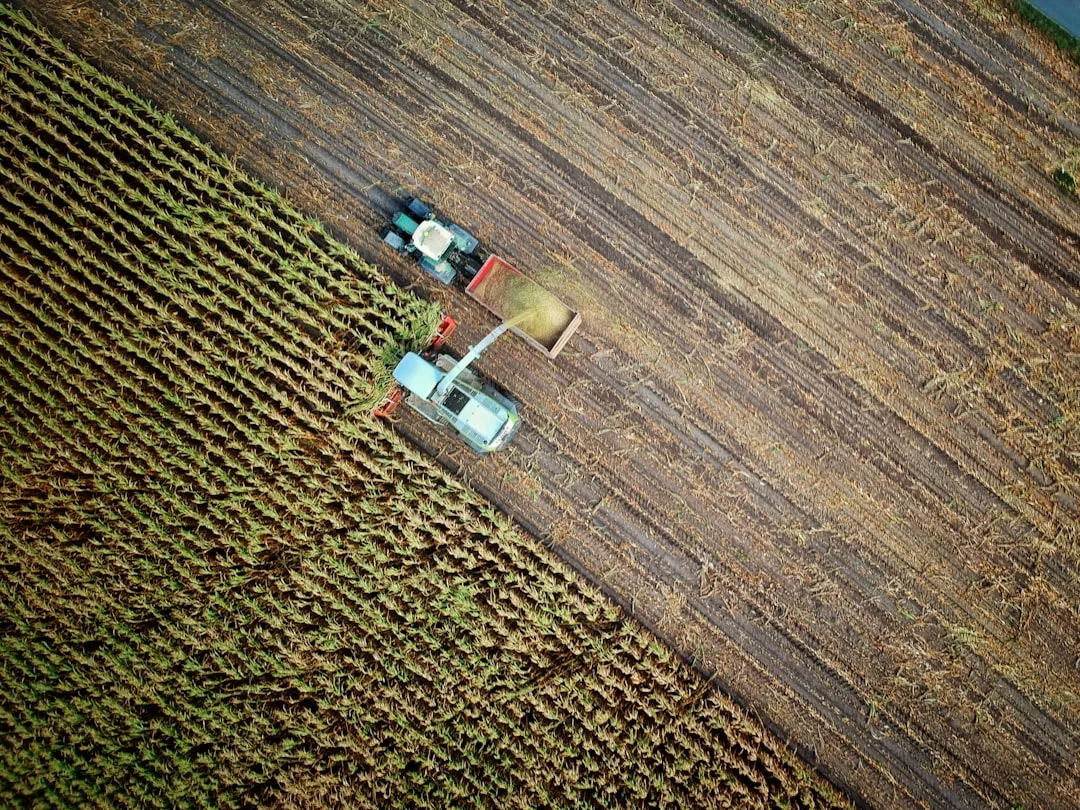
Photo by no one cares on Unsplash
Voice-enabled data capture is poised to reduce the time growers spend on manual note-taking and form-filling, especially in outdoor or harsh field conditions. When workers can dictate observations, treatments, or measurements, the need to physically stop work and type or write can be dramatically reduced. Early industry pilots indicate improvements in field note completeness and timeliness, with voice transcripts feeding into farm-management systems for analysis and action. This has implications for productivity metrics and decision cycles across crop management, pest control, and harvest planning. The broader market context reinforces that voice AI adoption is being driven in part by the need to preserve labor capacity and maintain data quality in the face of workforce shortages. (wadhwaniai.org)
Multilingual access and regional scalability
The agricultural sector is highly diverse in language and literacy profiles. Multilingual voice-first tools can broaden advisor reach, enable real-time translation, and empower frontline workers in regions with language fragmentation. Bartronics India’s February 2026 initiative underscores this demand for voice-first, multilingual agritech interfaces designed to reduce barriers and accelerate adoption in complex field environments. When combined with real-time transcription and integration into farm workflows, multilingual voice AI can unlock more consistent data collection and faster translation of agronomic guidance across supply chains. (agrotech.space)
Data Quality, Privacy, and Governance
From spoken notes to structured data
Voice-first data capture is not just about transcribing speech; it is about transforming spoken input into structured data that can feed dashboards, alerts, and decision-support workflows. The Wadhwani AI Agri AI Collect project demonstrates how spoken farmer notes can be transformed into standardized data formats, which is a critical step toward scalable analytics and precision farming interventions. As farms seek more granular insights—disease risk maps, irrigation scheduling, and yield forecasting—the fidelity of voice transcripts and their downstream data models will be pivotal. (wadhwaniai.org)
Privacy and on-device processing
Privacy considerations are central to user trust in voice tools in agriculture, where sensitive farm data may include location, planting schedules, and proprietary practices. Industry participants emphasize on-device processing and strict data governance to minimize data leakage and ensure operator control over recordings and transcripts. SaySo, as part of its broader positioning in the market, highlights the importance of privacy and local processing in its communications with enterprise buyers, reflecting a growing preference for data-resilient architectures in field environments. Readers should watch for regulatory guidance and best-practice frameworks as adoption expands. (sayso.ai)
Market Dynamics and Competitive Landscape
The shape of 2026–2030 in agricultural voice AI
Photo by James Baltz on Unsplash
Market analyses and industry coverage suggest a rapid expansion of voice-enabled solutions across agriculture, with startups and incumbents racing to deliver robust, field-ready capabilities. The convergence of voice-to-text, natural language understanding, and domain-specific agronomic models creates opportunities for end-to-end workflows—from field notes to advisory services and farm-management platforms. The presence of pilots and regional launches (for example, multilingual agritech platforms in India) demonstrates a credible path to broader adoption in emerging markets as well as mature farming regions. While exact revenue forecasts vary by source, the overarching theme is clear: Voice AI in Agriculture and Precision Farming 2026 is poised to become a central component of modern farming technology stacks. (agrotech.space)
Stakeholder Impacts
Farmers and farm workers
Farmers gain faster access to advisory content, real-time field notes, and risk alerts through spoken language, which can improve timeliness and accuracy of field interventions. Workers with limited literacy or who are working in challenging weather conditions may benefit particularly from hands-free data capture, enabling better task sequencing and documentation without interrupting workflows. The industry’s current emphasis on hands-free data capture makes these benefits highly tangible in row crops, orchards, greenhouses, and livestock operations. (cgiar.org)
Agritech providers and system integrators
For agritech vendors and system integrators, voice AI in agriculture represents a strategic pathway to differentiate offerings with field-ready data capture, multilingual support, and seamless integration into farm-management ecosystems. The Bartronics India example illustrates how regional players are accelerating voice-first design, emphasizing user-centric interfaces that align with local languages and workflows. This signals opportunities for collaboration with global vendors seeking to extend reach into diverse farming contexts. (agrotech.space)
Policy makers and researchers
From a policy perspective, voice-enabled agriculture intersects with issues of rural digital inclusion, workforce development, and data governance. CGIAR’s exploration of voice technology in advisory services spotlights how research organizations can help validate and scale voice-enabled approaches that bridge knowledge gaps for smallholders and extension networks. Policymakers can use these lessons to design programs that incentivize safe, scalable adoption of voice AI tools in agriculture. (cgiar.org)
Section 3: What’s Next
Next Steps for Adoption and Innovation
Short-term trajectory: 12–18 months
- Pilot expansion: Expect more farms to pilot voice-first data capture across crop cycles, with emphasis on multilingual support and offline capabilities to cope with connectivity limitations in rural areas. The Bartronics India initiative exemplifies a model for regional pilots that can scale through partnerships with local agritech providers and extension services. (agrotech.space)
- Integration with farm-management systems: Vendors will push for tighter integration between voice transcripts and farm-management platforms, enabling automated task creation, harvest planning, and supply-chain updates directly from spoken notes. This is consistent with broader industry moves toward end-to-end digital farming workflows that start with reliable field data capture. (wadhwaniai.org)
- Advisory augmentation: As CGIAR and other research institutions publish case studies and pilot results, advisory networks are likely to incorporate voice-enabled interfaces more broadly, enabling farmers to access timely agronomic guidance through spoken interactions. (cgiar.org)
Medium-term horizon: 2–5 years
- Global expansion into diverse agro-ecologies: With pilots in India and other regions, voice AI for agriculture is likely to expand into Africa, Latin America, Southeast Asia, and Europe, with adaptations to local languages, dialects, and agronomic practices. This expansion will be driven by vendor ecosystems, government programs supporting digital agriculture, and market demand for improved data capture in farming. (agrotech.space)
- Advanced analytics and decision-support fusion: Voice transcripts can feed into predictive models for pest outbreaks, irrigation optimization, harvest forecasting, and supply-chain risk management. As data quality improves, farmers and agribusinesses will increasingly rely on voice-sourced data to drive prescriptive actions alongside traditional sensor data and imagery. (cgiar.org)
- Privacy-centric architectures as default: With data governance becoming a first-order concern for farmers and agribusinesses, on-device processing and privacy-preserving designs are likely to become standard expectations for voice AI solutions used in agricultural contexts. SaySo and peers may highlight these capabilities as core differentiators in 2026–2027. (sayso.ai)
What readers should watch for next
- New pilots and partnerships: Expect more agritech vendors to announce voice-first collaborations that combine field data capture, advisory services, and farm-management analytics. Industry watchers should track regional launches and pilot outcomes to gauge scalability. The Bartronics India example provides a blueprint for regional rollouts. (agrotech.space)
- Regulatory and standards developments: As voice AI is applied to agriculture data, standards for data interoperability, privacy, and consent will become more prominent. Stakeholders should stay alert to regulatory guidance and industry best-practice guidelines that address on-farm voice data. (cgiar.org)
- Competitive dynamics: The broader market for voice AI is robust and evolving, with continued competition among vendors to deliver higher accuracy, better multilingual support, and more seamless integration with existing farm systems. Expect innovation to accelerate in the coming years as enterprises experiment with use-case breadth—ranging from field notes to automated reporting and beyond. (cxtoday.com)
Closing
The story around Voice AI in Agriculture and Precision Farming 2026 is not just about new technology; it’s about how farms can operate more intelligently and efficiently in a changing labor landscape. Across pilots, regional deployments, and research-backed advisory applications, voice-enabled data capture is emerging as a practical, scalable capability that businesses can deploy today to improve data integrity, decision speed, and traceability from the field to the fork. SaySo, with its focus on real-time transcription, multilingual data handling, and privacy-respecting on-device processing, is well positioned to serve as a bridge between the field and the desk, helping professionals turn spoken words into precise, actionable outcomes. The industry’s momentum—coupled with the research and pilot results already underway—suggests that this is a pivotal moment for agricultural innovation. As the sector continues to embrace Voice AI in Agriculture and Precision Farming 2026, readers should watch for expanded multilingual deployments, deeper integrations with farm-management ecosystems, and more transparent, data-driven farming practices that benefit growers, workers, and consumers alike.
Farmers and agribusinesses that want to stay ahead should consider how voice-to-text tools can fit into their daily workflows: documenting field observations in real time, capturing pest and disease notes, logging fertilizer and irrigation events, and generating summaries for coaching or regulatory reporting. The next 12 months will likely reveal concrete results from pilots, with clearer ROI signals as transcripts feed into actionable dashboards and decision-support systems. For anyone evaluating voice AI for agriculture, the practical takeaway is simple: begin with a well-defined field-use case, ensure multilingual and offline capabilities meet your needs, and design data workflows that respect privacy while maximizing data quality and timeliness. SaySo’s ongoing work in voice-to-text technology and its emphasis on practical field utility position it as a meaningful option for teams seeking to unlock real-world field intelligence through speech, not just speech as a novelty. To learn more about SaySo and its approach to voice-to-text solutions, visit SaySo at https://sayso.ai and explore how SaySo voice-to-text can fit into your agricultural operations. (sayso.ai)
Author
2026/06/15


